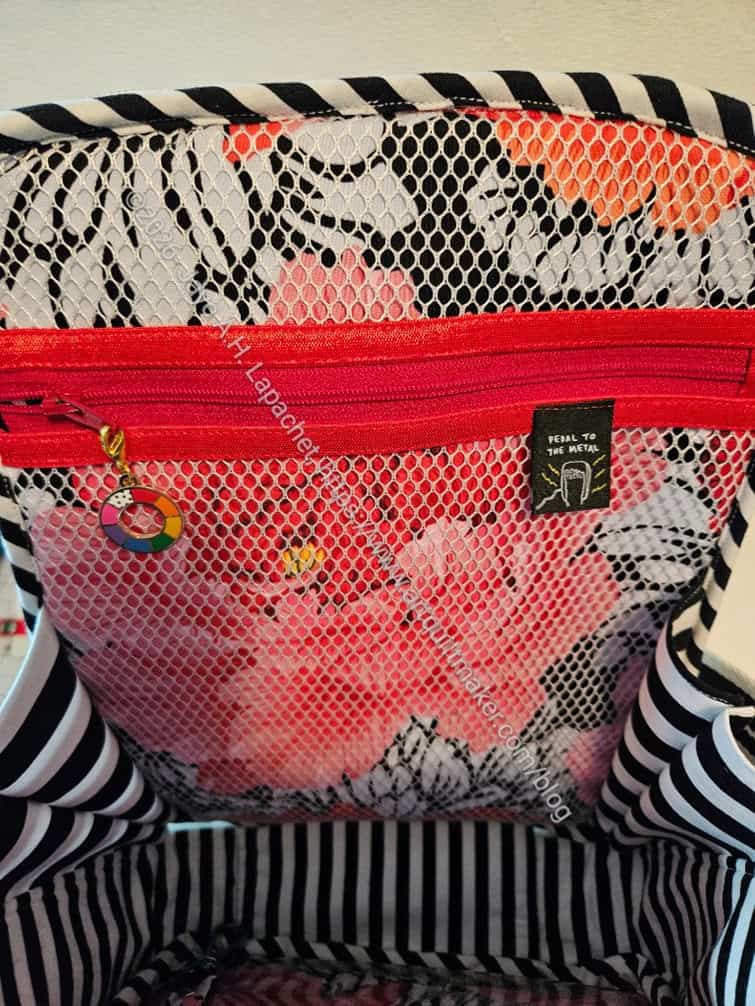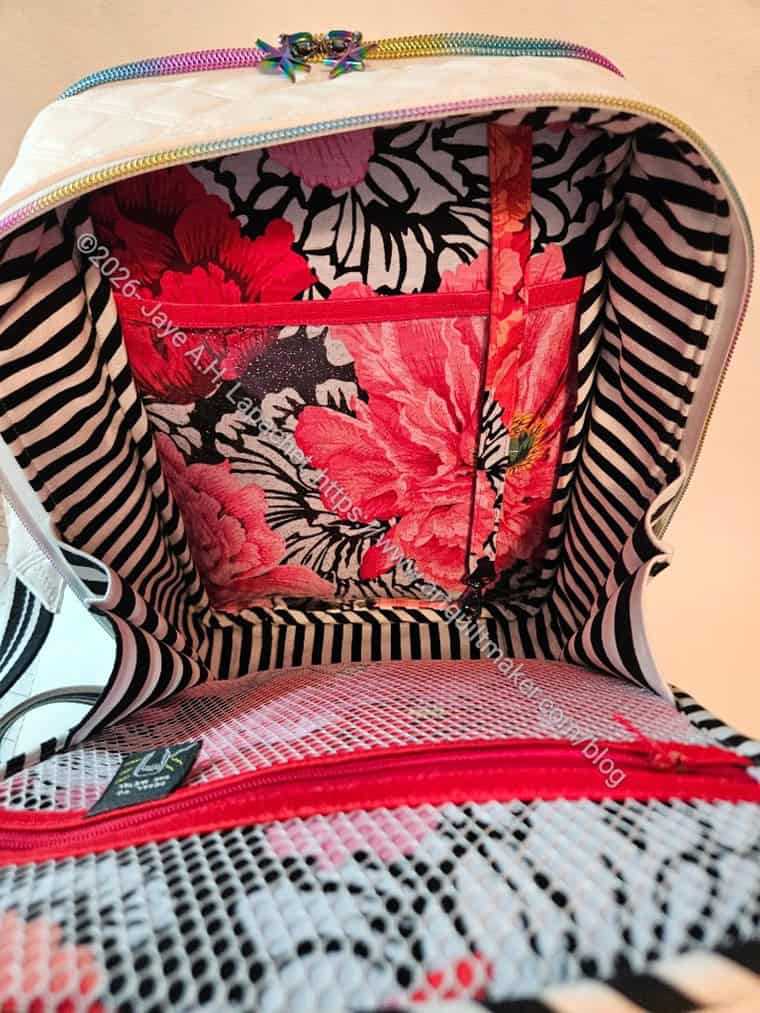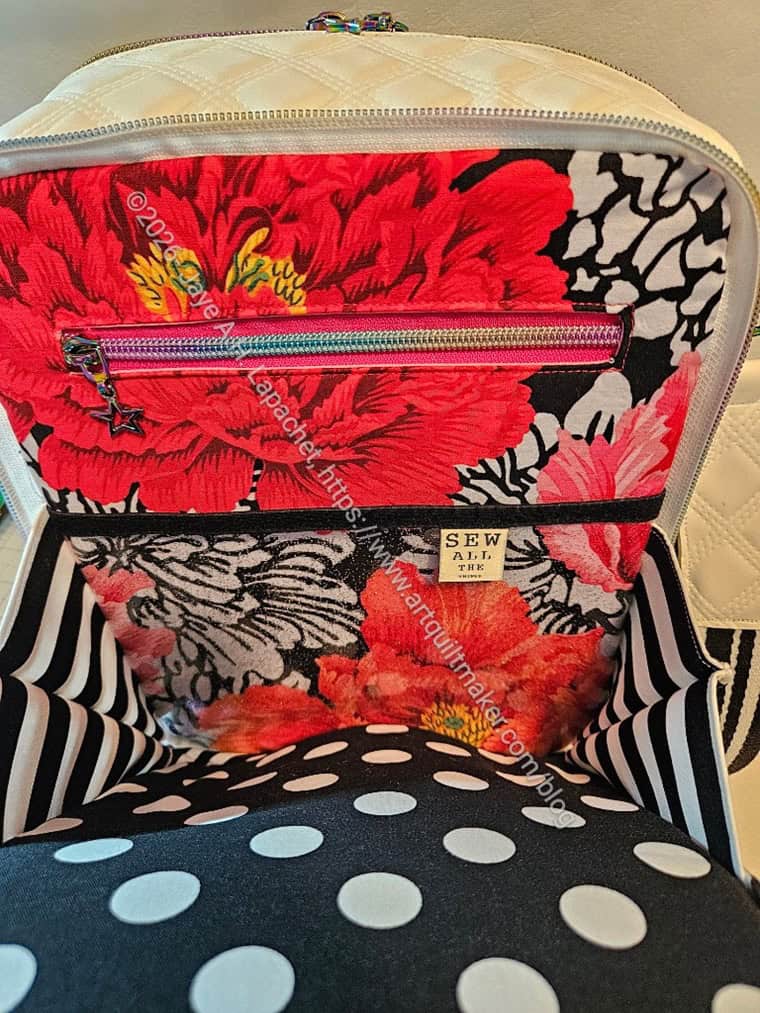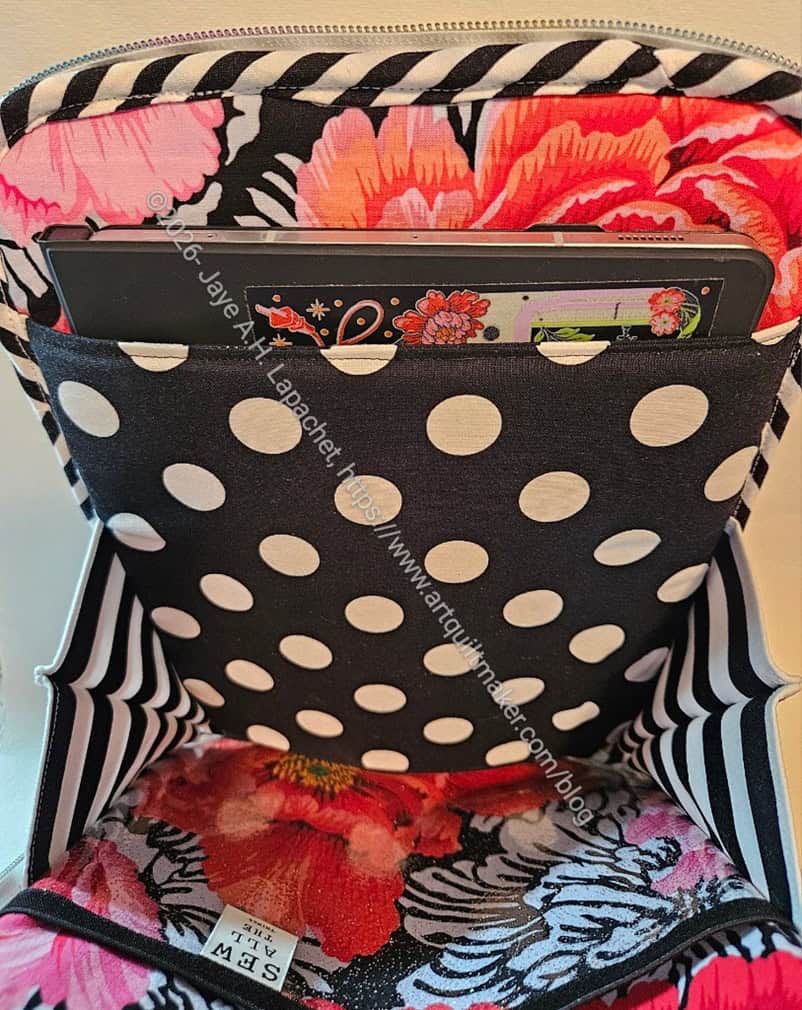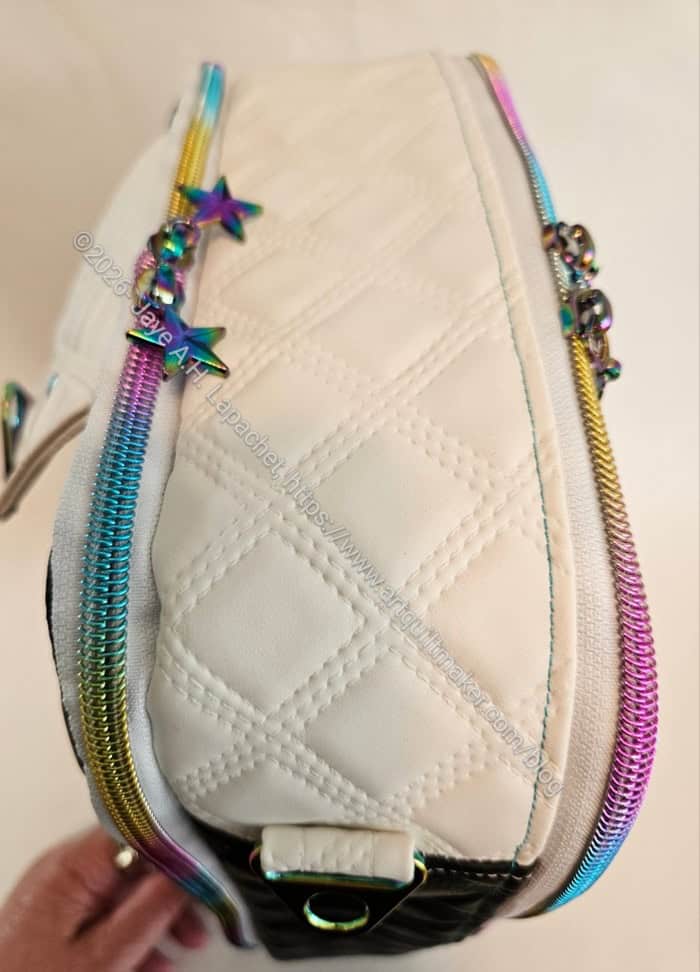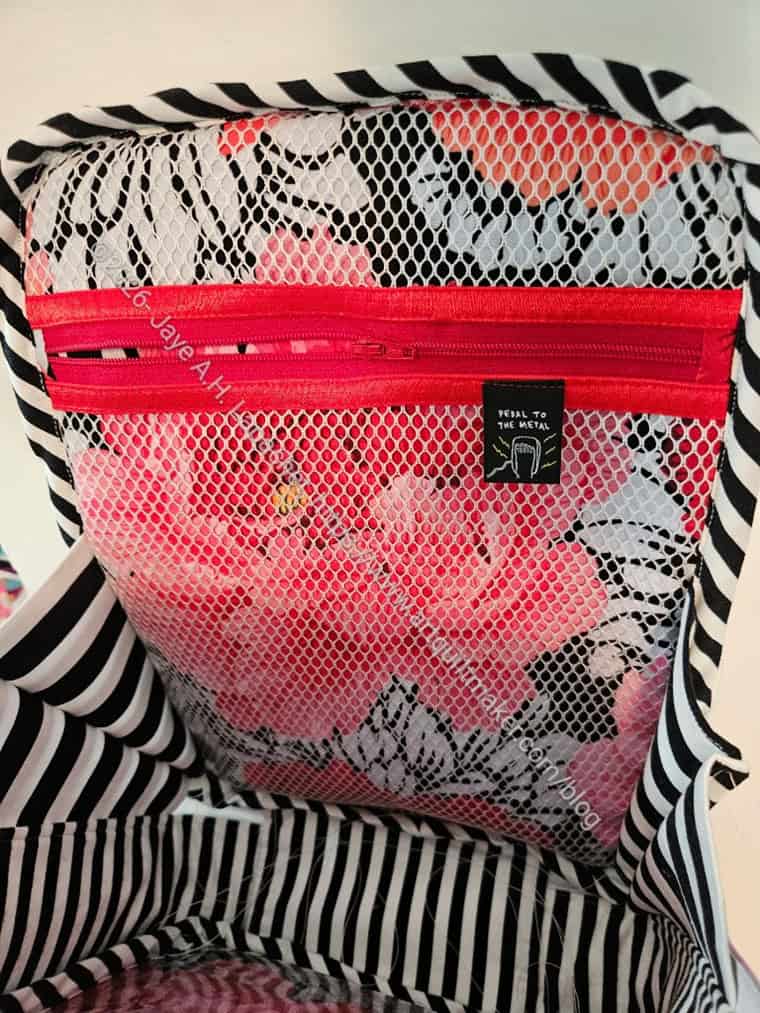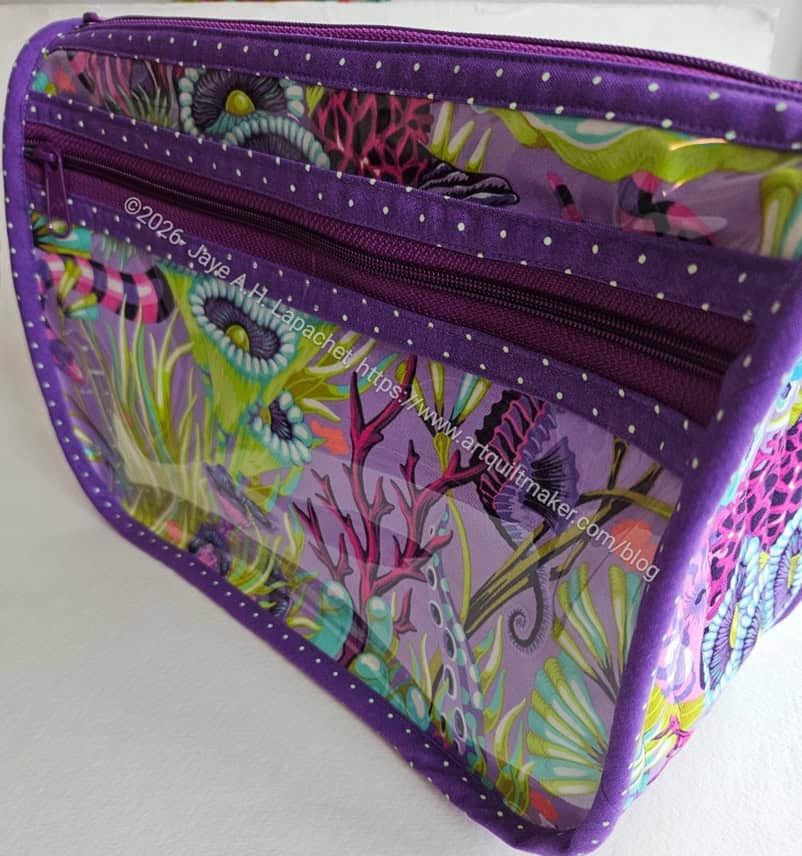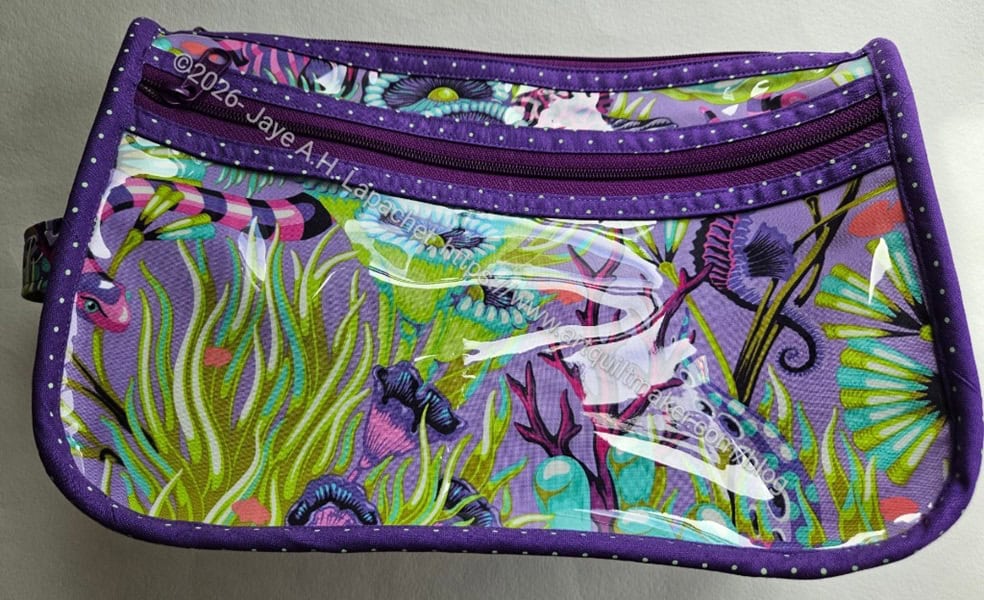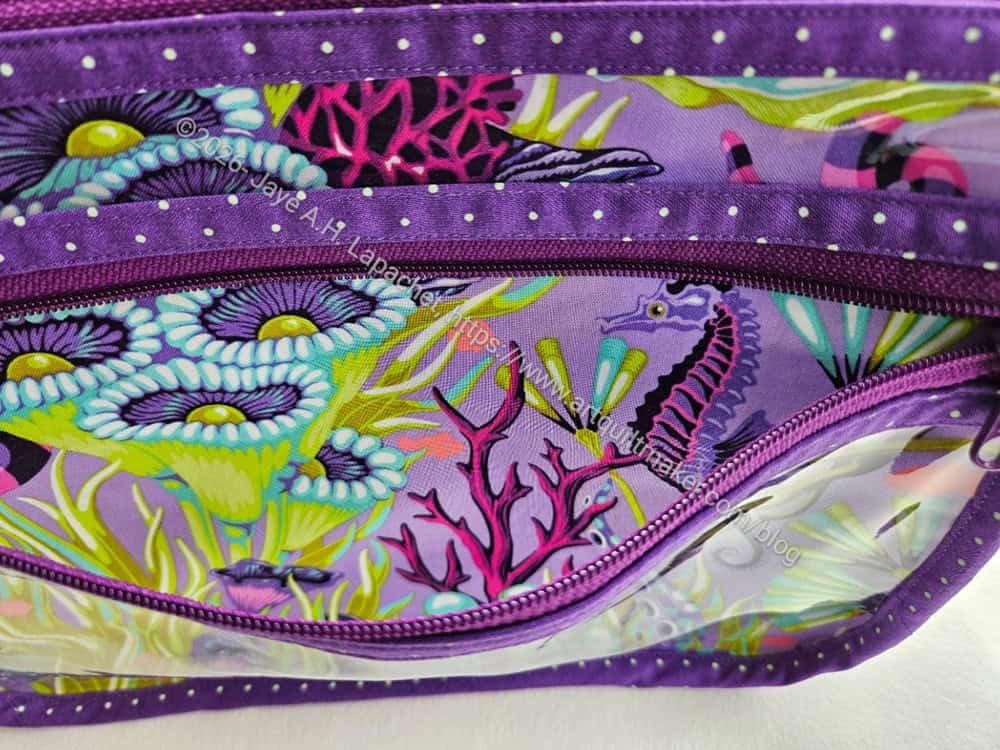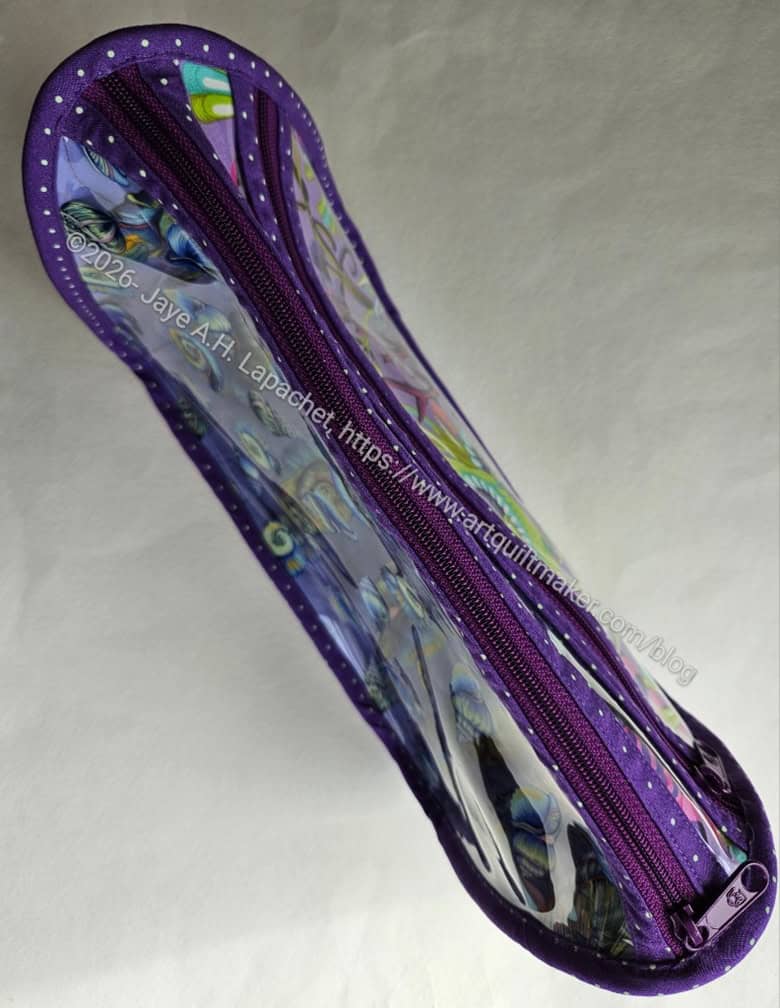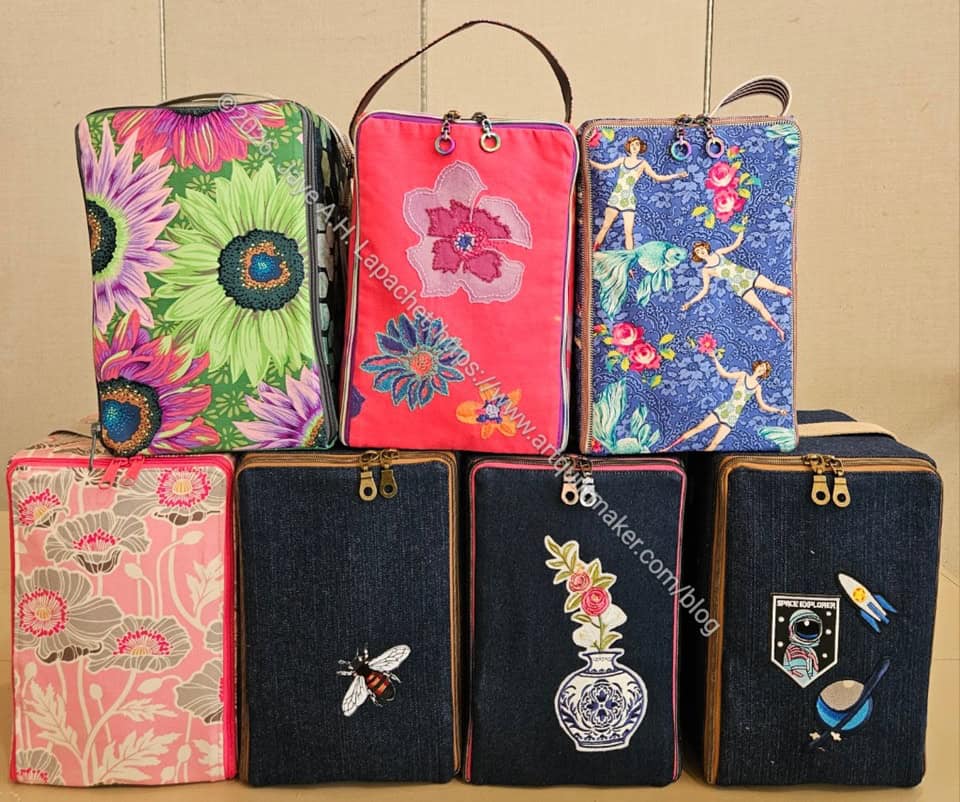
Pandora Charisma #2

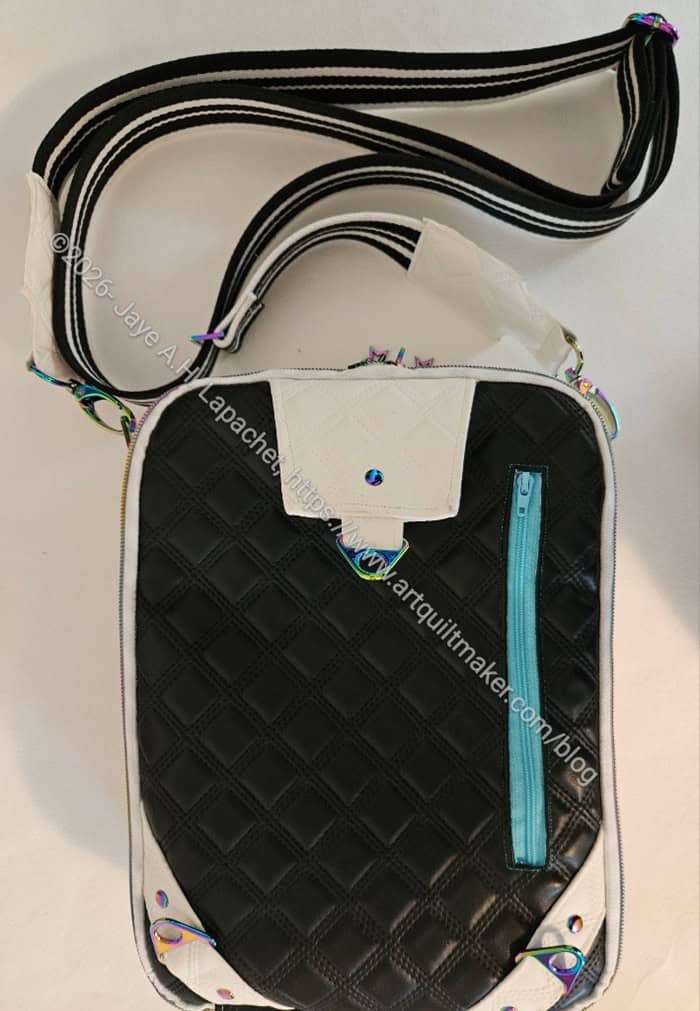
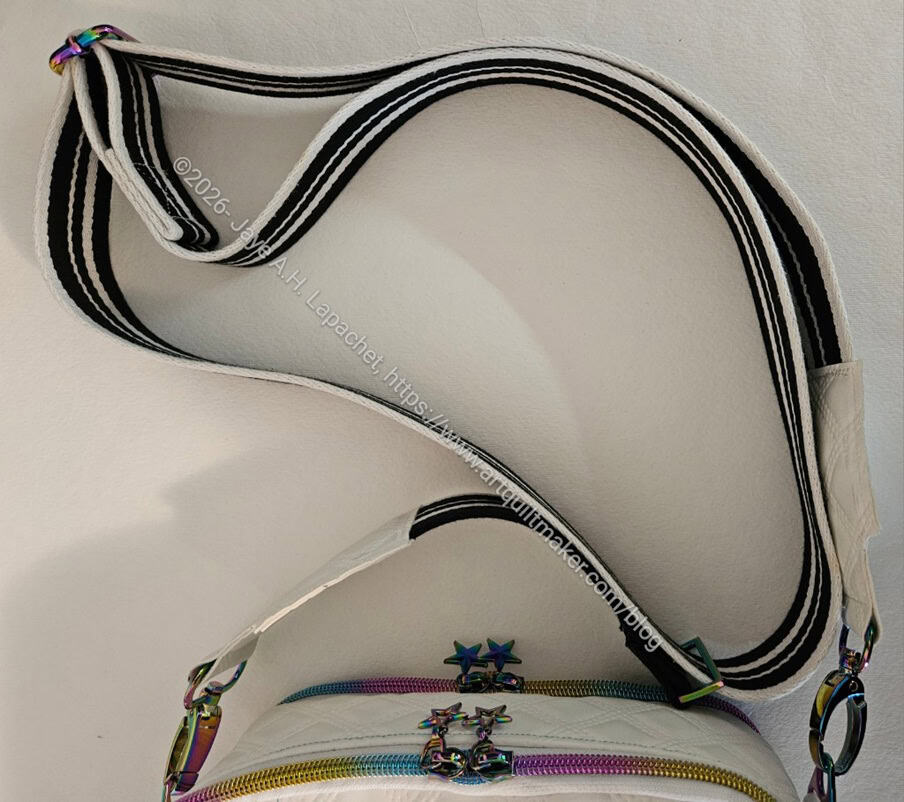
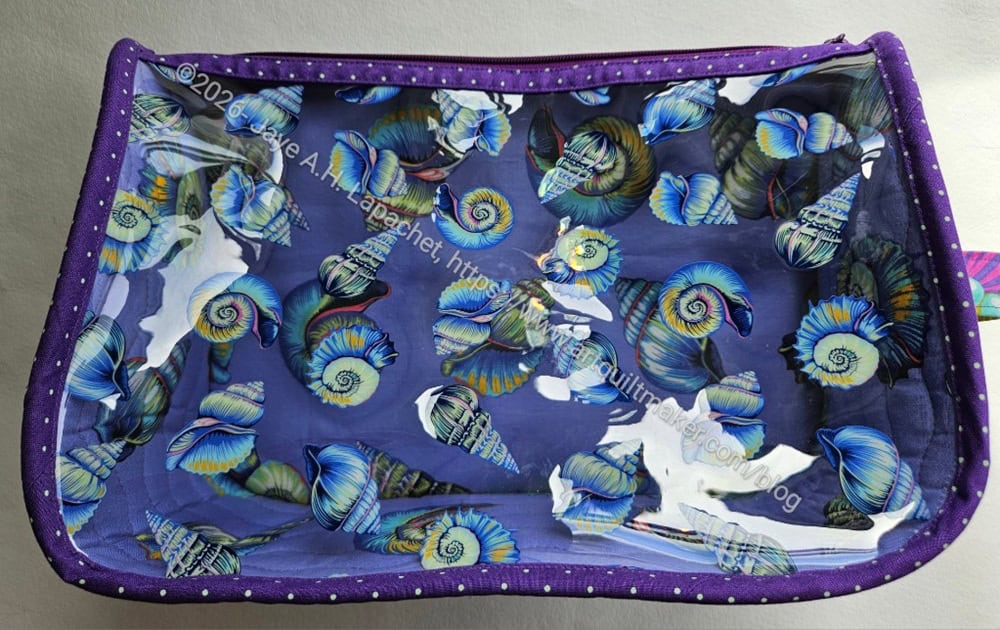
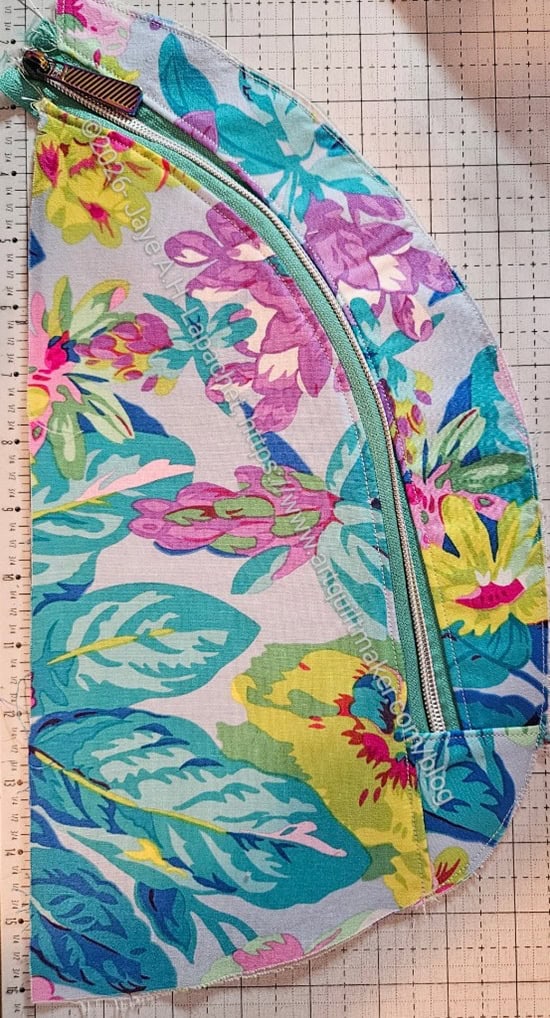
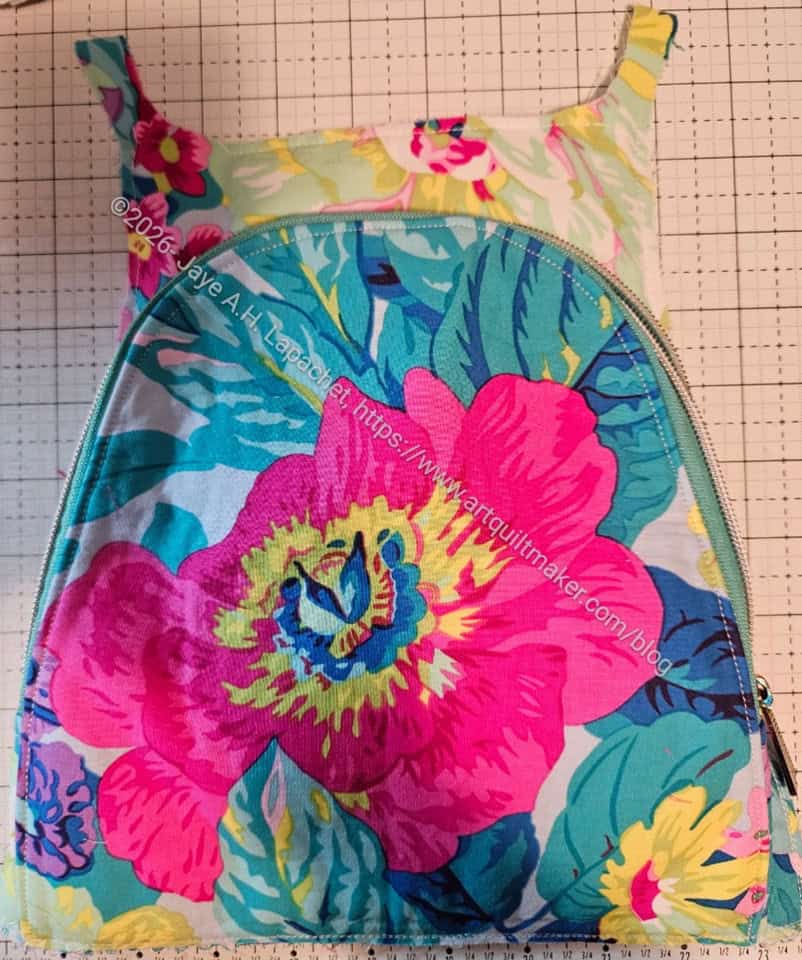
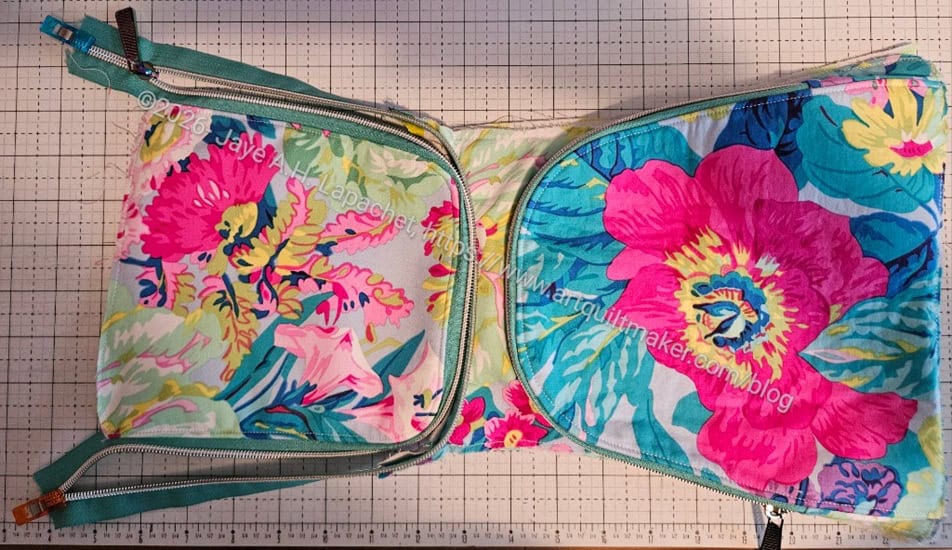
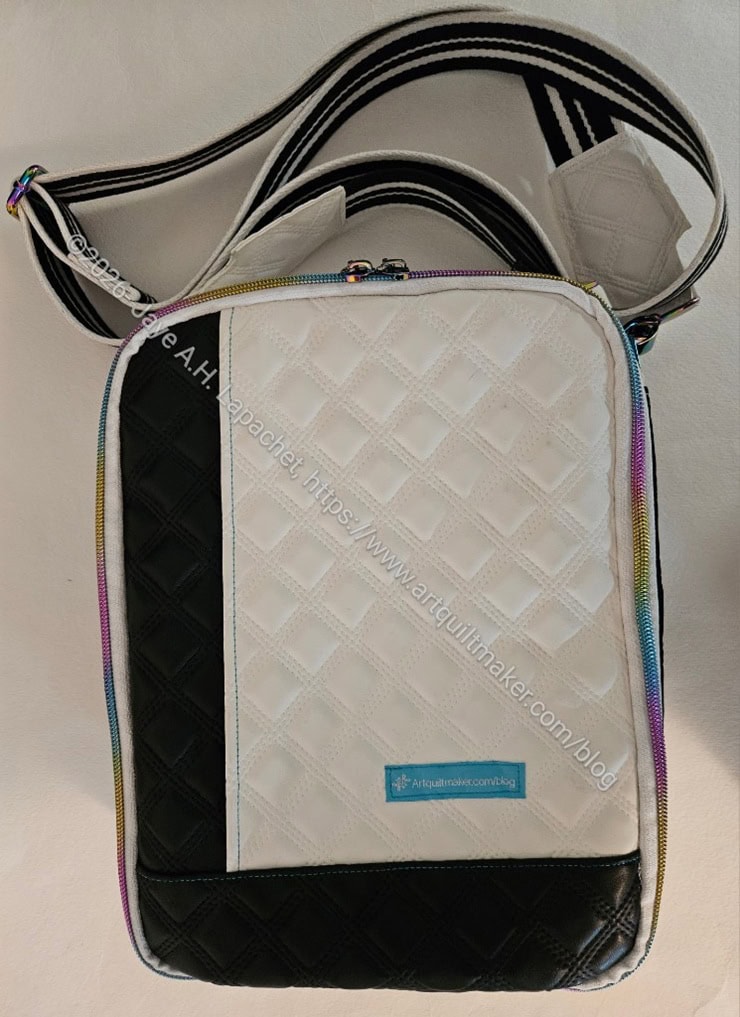
Pandora Charisma #2 front panel

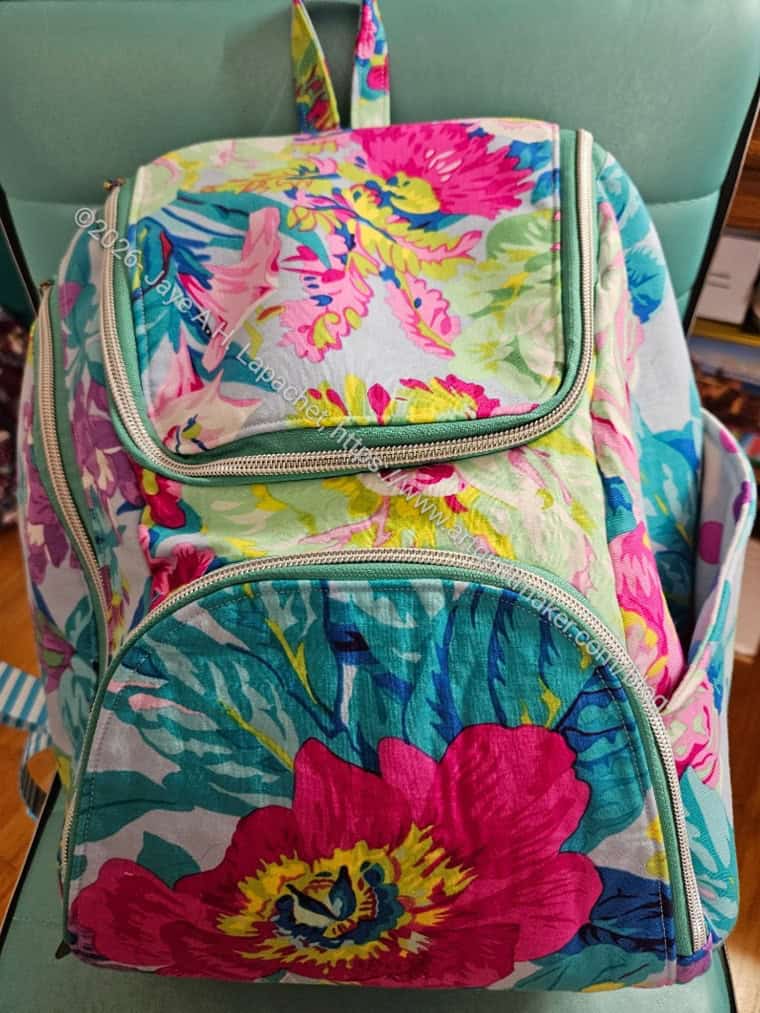
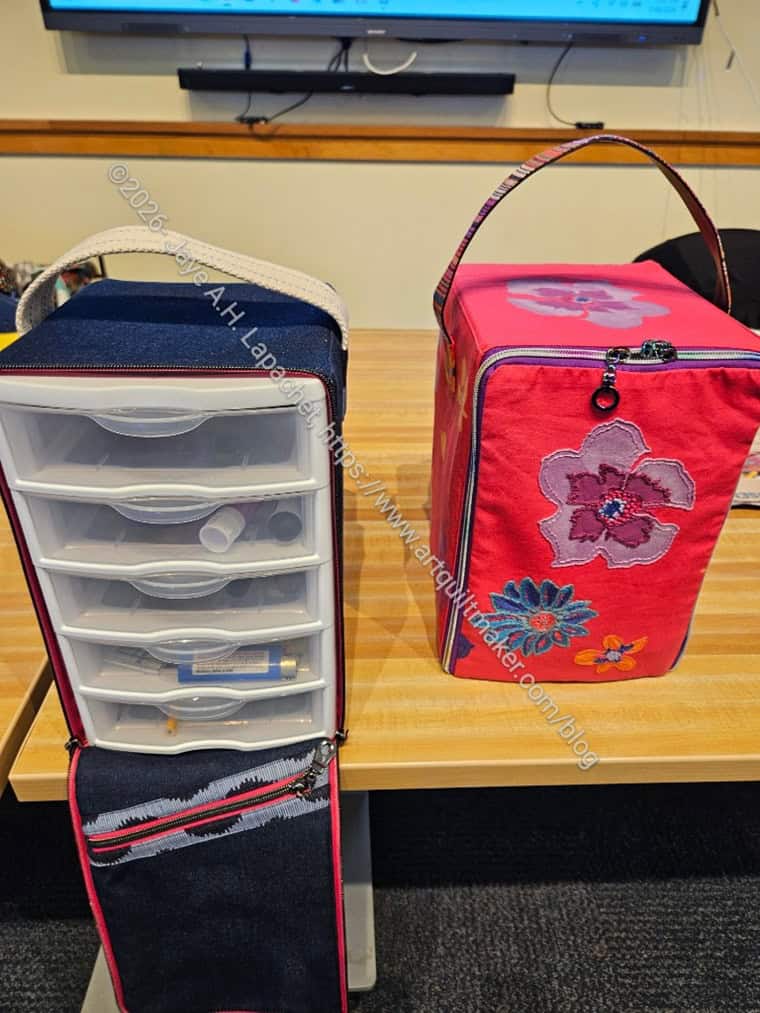
Amazingly I have recently continued to work on the Pandora Charisma #2. I didn’t have a Pandora Charisma #2, really, but decided I would make another one with the front panel I sewed when testing the Elna.

It wasn’t a done deal that I would make another one as all I could remember was the struggles I had with the binding on #1. The win really made me excited about the project. Another reason I want to work on this project again (despite the hair ripping during the first one) is I want to see how the Elna does. I also think winning Best in Show made me want to try another one. 

On Sunday, when I was done beavering away on other non-sewing chores, I really thought about the project I wanted to work on. Since I am sort of in between quilts, I am working on tidying up little tasks. I made a binding for the Warm Four Patch Fun, I processed a bunch of scraps and did a few other fabric related tasks. I wasn’t ready to start a new quilt or revisit a WIP yet, so the Pandora Charisma settled into my mind. I did really want to work on it. So I did. 
Pandora Charisma #2: back panel

I made the back panel. I didn’t scream through it like I did on the front panel, but I did make it. I found it didn’t take long at all. 
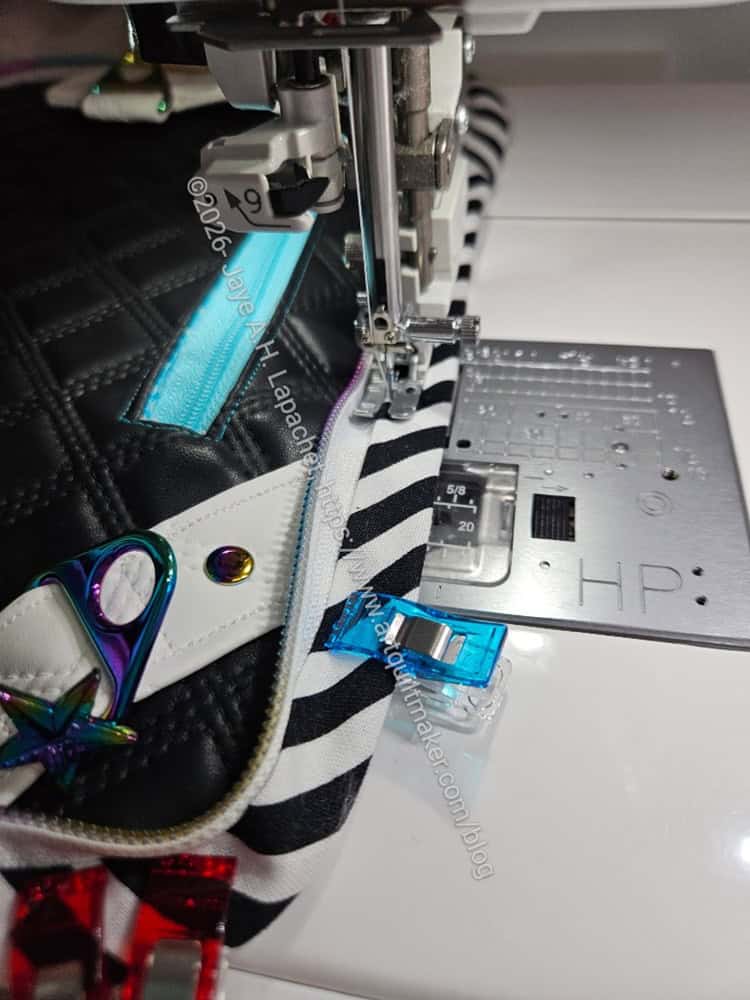
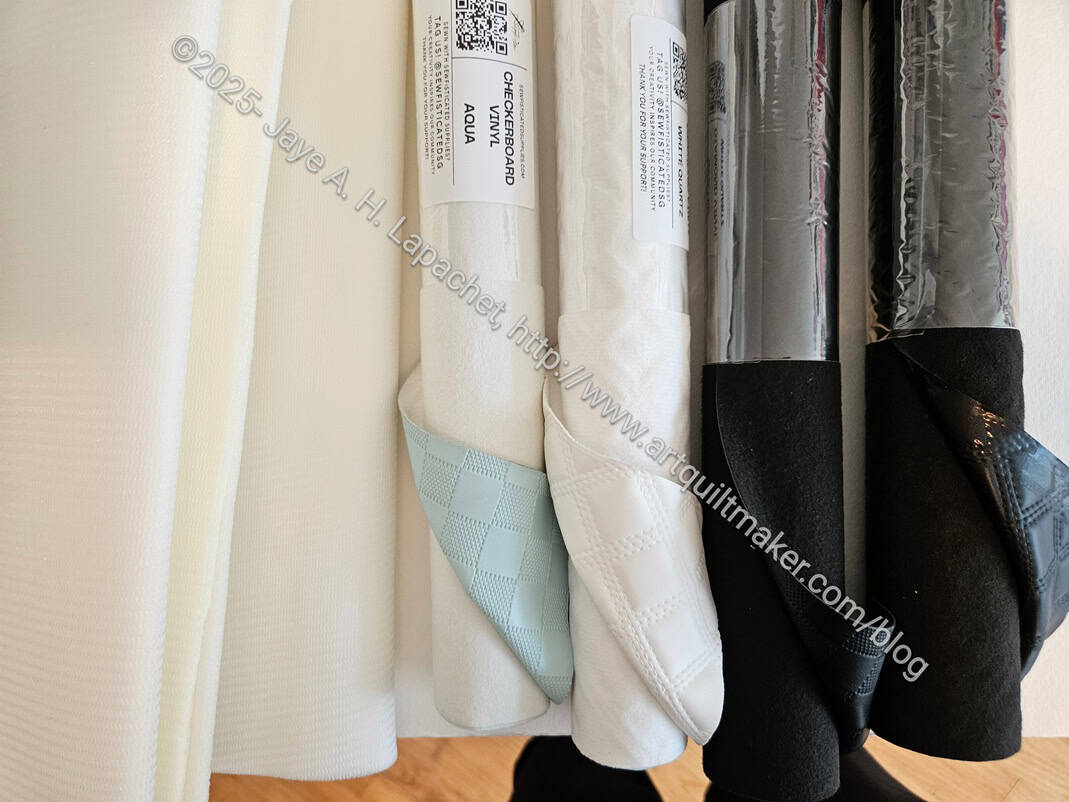
So far so good. This piece uses the Diamond Quilted Vinyl that looks like pleather. I always refer to it as pleather as I think of vinyl as clear. Anyway, this stuff acts like vinyl, so I after 1 stitch put on the Teflon foot and needle plate. What a dream! Those two are a powerhouse combo! No issues with pulling or sticking. 

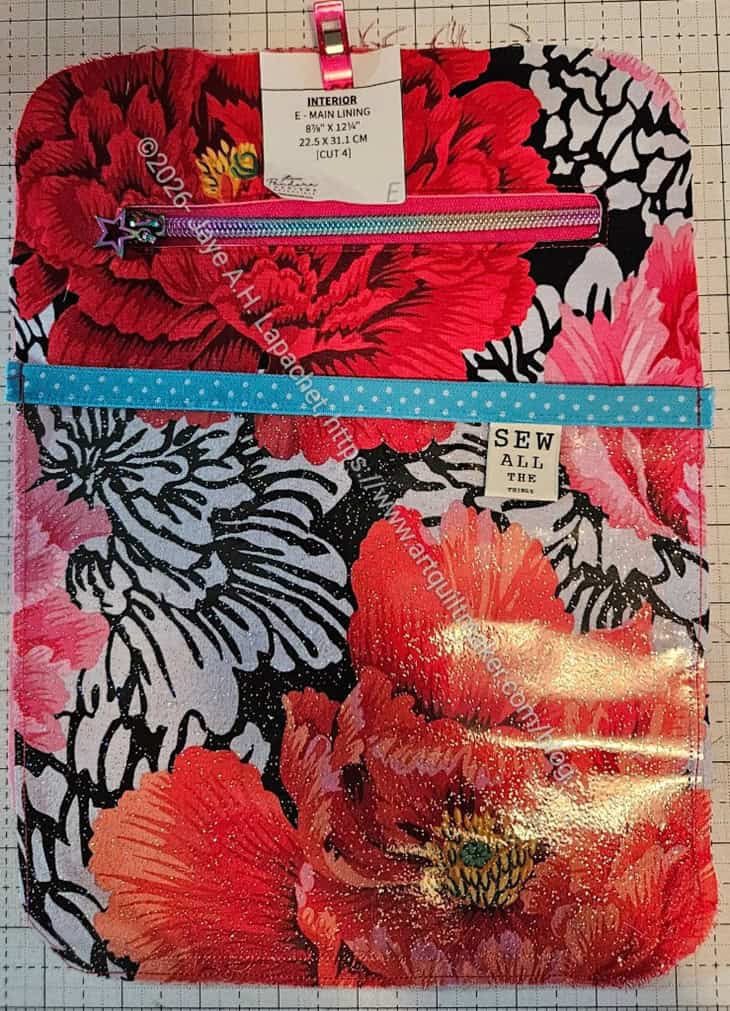
This time I used regular (#3??) zippers for the hidden zippers in the front and back panels. So far so good, though it was a challenge to get the zipper surround to lay flat. 

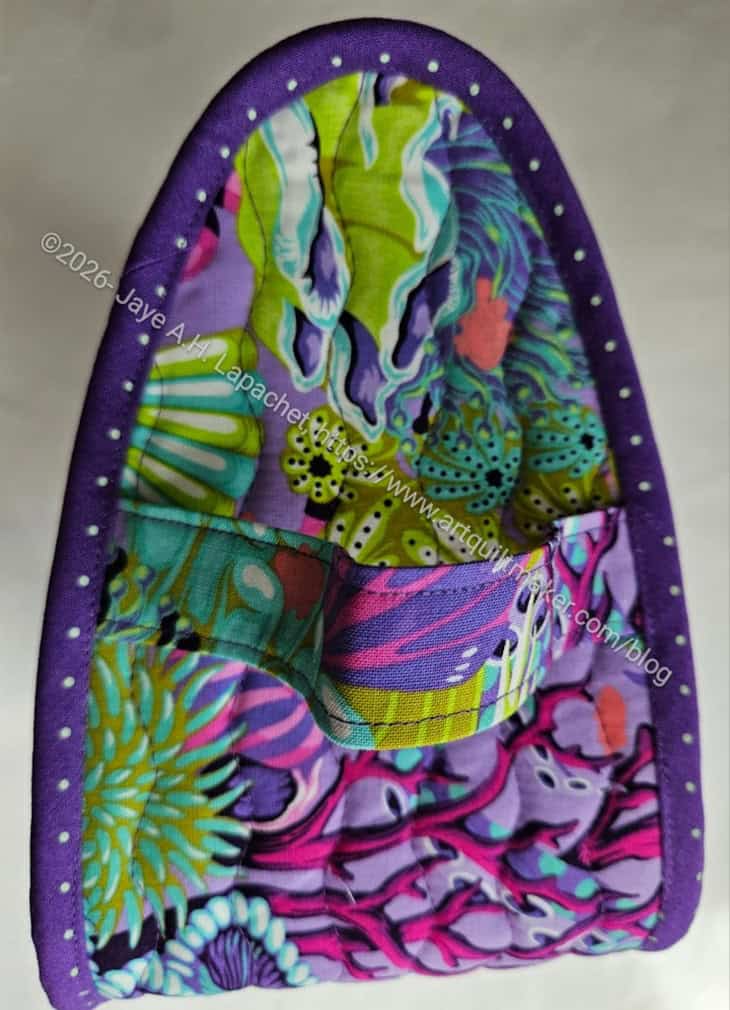
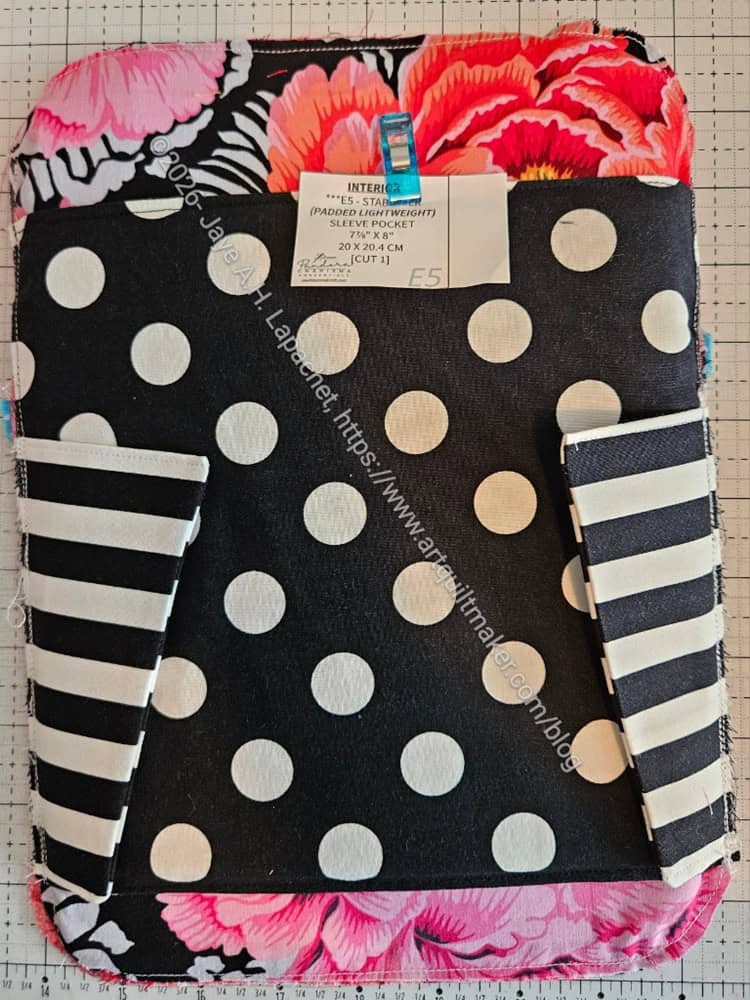
The next step is to make the gussets for the inside. It was a good stopping point. Stay tuned!

Divided Basket

Divided Basket
Divided Basket

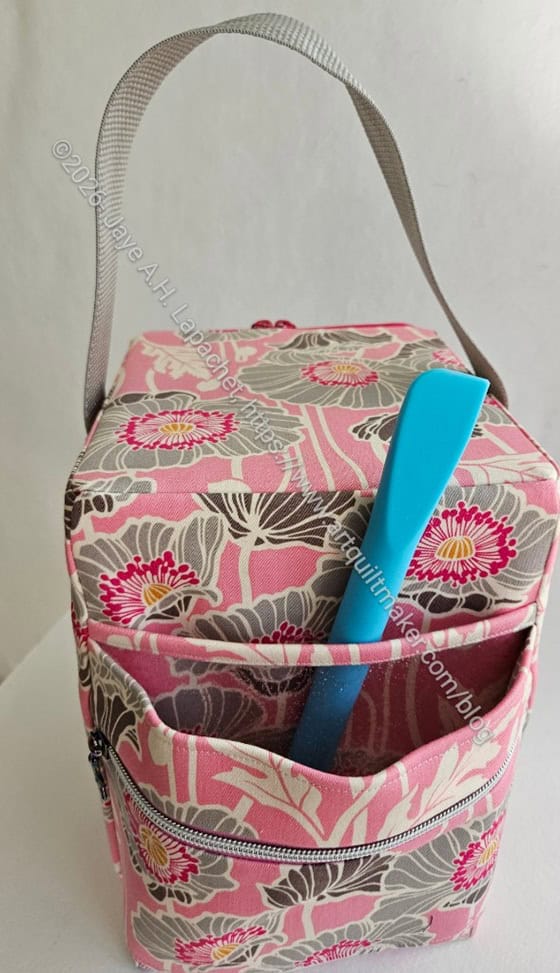
Mary and I talked about this pattern when I visited her. She had the pattern it was on her list to make. I saw it at Picking Daisies, as mentioned, and decided to buy it. Noodlehead patterns are pretty good and I was interested to see how the divided lining was created.

Continuing with the Picking Daisies theme, I used the roses fabric I bought during my visit. The front pocket fabric is an Alison Glass, I think. It was in my fabric closet.

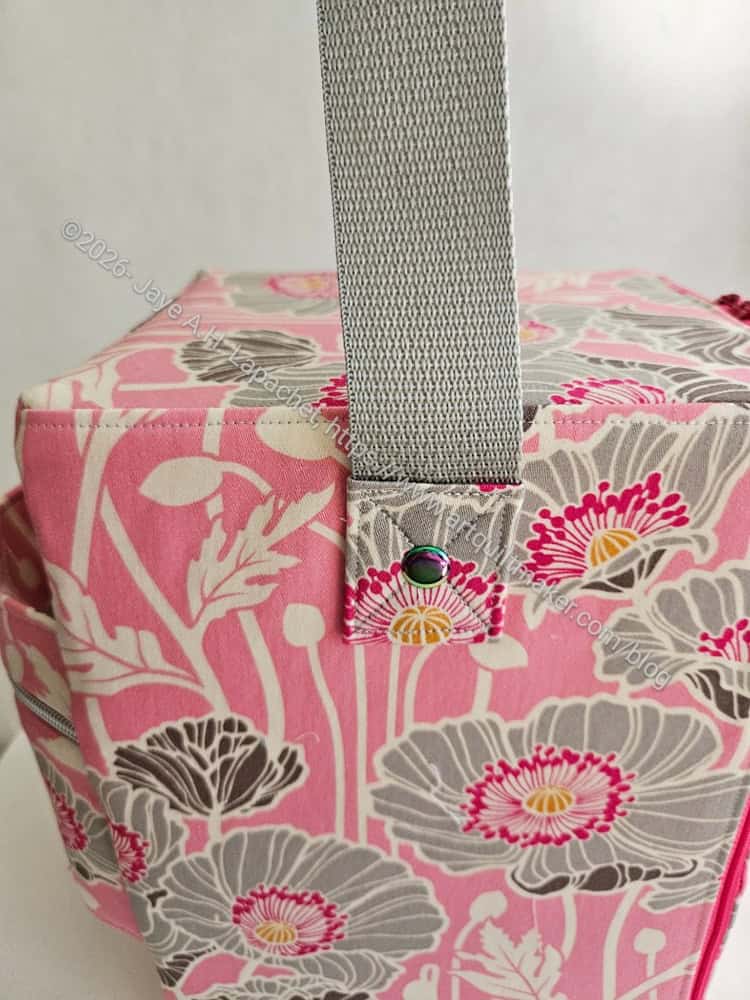
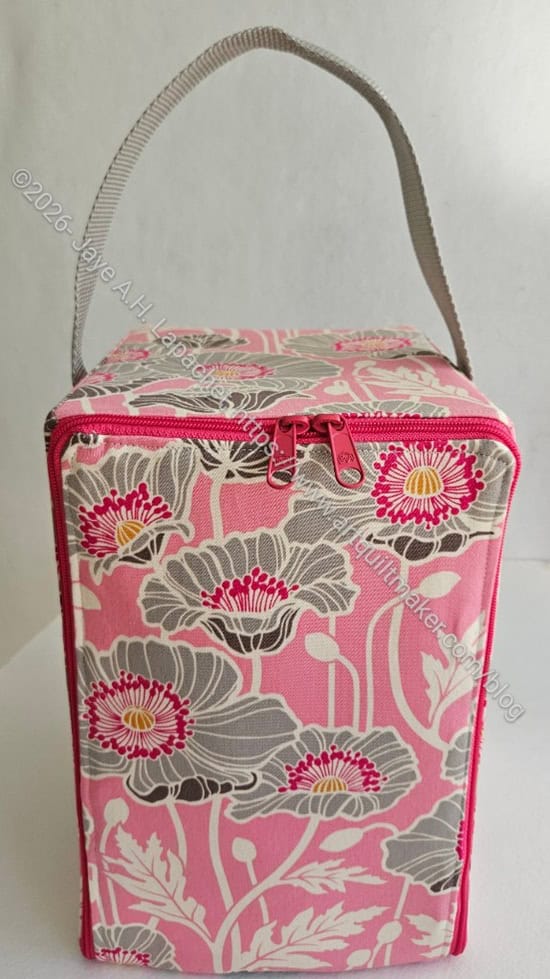
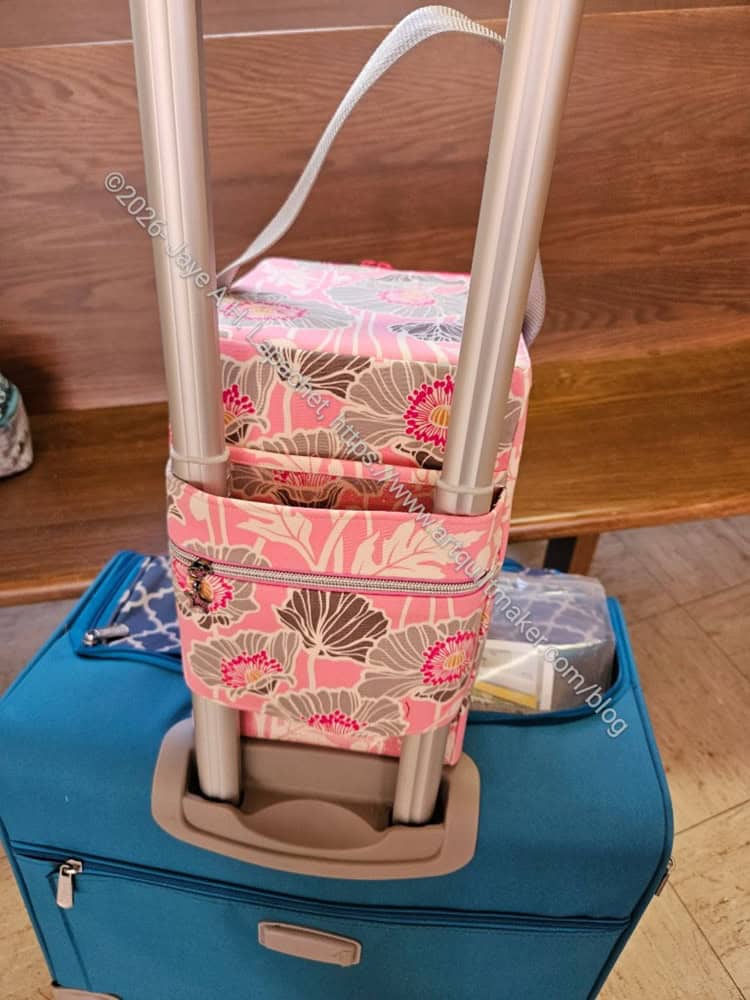
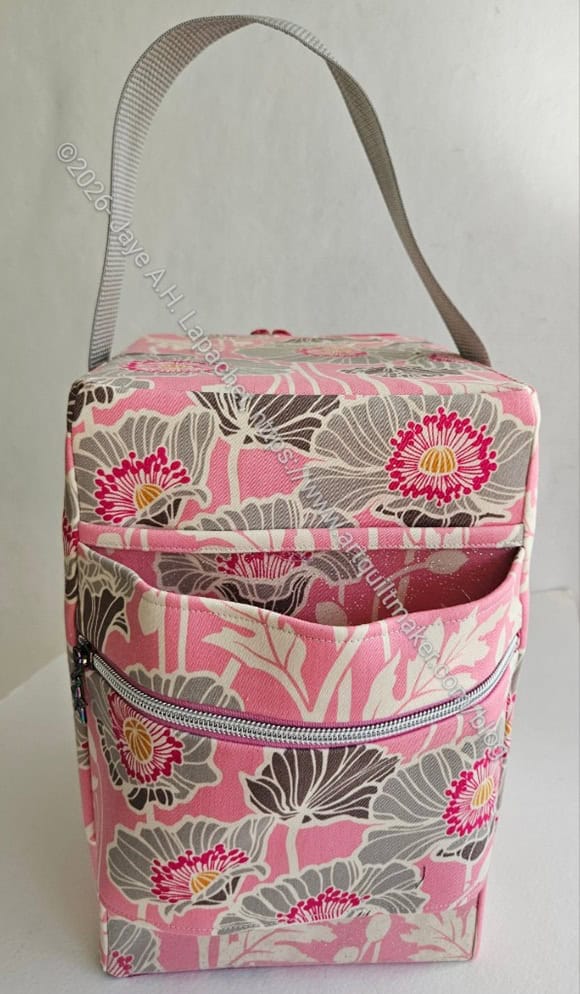
Divided Basket - back
Divided Basket – back

I was surprised at how large this basket is. I did look at the dimensions, but I can never visualize them until I see the actual bag made. It would be good temporary storage for a bag project. 

I thought, after I made it that I could place a pocket on the back as well for even more storage.

Divided Basket - interior
Divided Basket – interior

I was pleased to learn the technique for a divider.

I sewed the whole thing together, then realized I really should have anchored the lining, so I took the basket apart and anchored the lining. I was much happier after I did that.

I sent the basket off to its new home and hope the recipient likes it.

Hello Pythagoras

Do you know that feeling when you step into a hole and everything tilts. That happened to me, without the sprained ankle, when I asked DH a simple question.

Boxing corners :(
Boxing corners 🙁

I was working on the Open Wide pouches I talked about the other day. Anna from Noodlehead has makers line up the corner seams, sewing then cutting off a bit to box the corners. I prefer to cut out a box and then do the lining up.

I asked him how to find the number to cut out the box from the “lining up the seams and cutting off a bit” number.

DH said “Pythagorean theorem”.

Holy smokes!

That &*^%$ math! He showed me the theorem. We talked through it and I understood a bit more about how it worked. Am I an expert? No. No, I am not.

I am really annoyed, though. If I had been shown how to make a pouch, then given this problem I would have understood the concept. Instead math teachers throughout my education wrote lines of numbers and letters on a chalkboard that all looked like gobbledy gook to me. Now I get it. Years too late to do more than squeak by in every math class I ever took after 3rd grade. Sigh.

Thanks to www.inchcalculator.com

OK, so here it is. Remember, I am not an expert, so your mileage my vary.

The key number is the number Anna said to cut off after lining up the points. It was 4.5 inches. 

The triangle has to be a right triangle, which means that one corner is 90 degrees. Your formula works like this:

a² + b² = c²

a=b

a² + a² = c²

2a² = c²

c=4.5 inches


In numbers this formula looks like:

4.5² =2a²

some math using the calculator

20.25 =2a²

10 1/8 =2a²

3.28=a


I looked at the number given in the small and medium sized Open Wide pouches and did the match. I came up with 4 (medium) and 3.5 (small). 3.28 isn’t a great number for quiltmaking or bagmaking, so I rounded. I found the Open Wides came out a bit of a weird shape. Still useful, but a little odd. I’ll have to play with the formula bit and I think rounding down might be the way to go.

New to Me Bag Patterns

In a way this post is an adjunct to my regular Various & Sundry posts. I did NOT buy these patterns. I just took pictures because there was something interesting about them. I have a record when/if I need the type of bag.

Modern Mat Bag
Modern Mat Bag

First was a Mat bag. It is called the Modern Mat Bag by Sew Organized Design. This is the most likely pattern I will buy. I have wanted to find a good Mat bag pattern to make as gifts for people I want to encourage to go to Sew Day.

Sew Organized Design is a company I have never heard of before. I went and looked them up and found they only have a few patterns listed on their website. All of them are on-the-go sewing related.

Hopscotch Handbag pattern

Next is the Hopscotch Handbag. It is designed by Karen Pratt of Creamcraft Goods. This another company which is new to me.

I liked the shape and design of this bag. I have to admit that the quilting on the top really adds to the look of the bag. I saw one site that sells this bag that had photos of the inside as well.

Karen has a nice blog post on another project called the Tri-Fold Journal Folio and Journaling tote.

Rambler by Karen Pratt

As mentioned in the Picking Daisies post, I saw more Karen Pratt patterns at that shop. Don’t worry, I am not going to tell you about all of the Karen Pratt patterns. I just wonder about how her bags came out of nowhere for me. I also liked the look of the Rambler pattern. It is a small messenger type bag with inside pockets for your phone and other small items.

I think including the hardware is a good idea, especially for new bag makers, however it means you are stuck with the chosen color rather than selecting the hardware finish you like.

Tube Frame Pouch by Karen Pratt

The other pattern I saw at Picking Daisies was the Wide Open Tube Frame Pouch. Since I am enamored with open wide bags at the moment, this one caught my attention. This open-wide bag is in pouch form. As shown and described the bag opens fully so you can see everything inside. It would be great for a knitting project bag.

The Side Hustle by Mrs. H.

The Side Hustle is a Mrs. H pattern. Mrs. H has a lot of patterns, a bag club, a book and bag retreats. The Side Hustle is a messenger-style bag that is designed for carrying a laptop and files. I really like the name of this bag, but also that rounded slip pocket on the front in the photo.

These bags have really widened my horizons in terms of bag designers. I know there are only a few. This is another reason I like to visit quilt shops when I travel.


Finished: Sheffield

Finished: Sheffield
Finished: Sheffield

Finishing the Sheffield took longer than I expected. I thought I was done, then I had to make the false bottom, and add a label and…

No problem. I really enjoyed finishing it.  REALLY! I realized that I have been anxious to get through the final assembly of recent bags, because that was the time when I fought with my machine. I didn’t even realize I was fighting with my machine until I used the new machine to put this bag together.

Sheffield: open wide design

The Sheffield has been on my list to make for a long time. Since I made Gerre hers, I wanted to make one for myself. The open wide design of this bag is very appealing.

The interior is made from an IKEA lightweight canvas I picked up from the free table. My lining is a little saggy baggy, despite the larger seam allowance. The lining will not fly out since I used my hard won knowledge (thanks, Lynette) of anchoring the lining to the exterior. One issue I had is that the pattern pieces for this bag are not square. They are trapezoids. I think something might have happened, because the pieces are trapezoids, when I was sewing the lining together that made them larger than I would have liked. I don’t know. 

Finished: Sheffield back

I finished most of the exterior pieces while visiting MaryM.

I did the final assembly at home after adding a leash and an interior zipper pocket. I wanted to add a slip pocket,but forgot in my excitement.

The handles on this bag are larger than the those indicated in the pattern. Sara has makers position the handles a half inch up from the bottom. This is so the handles clear the seam allowance. Beyond reducing bulk, I am not sure why. I would like to say I will try putting the handles in the bottom seam on my next one, but I am not sure I will make another one.

Finished: Sheffield top

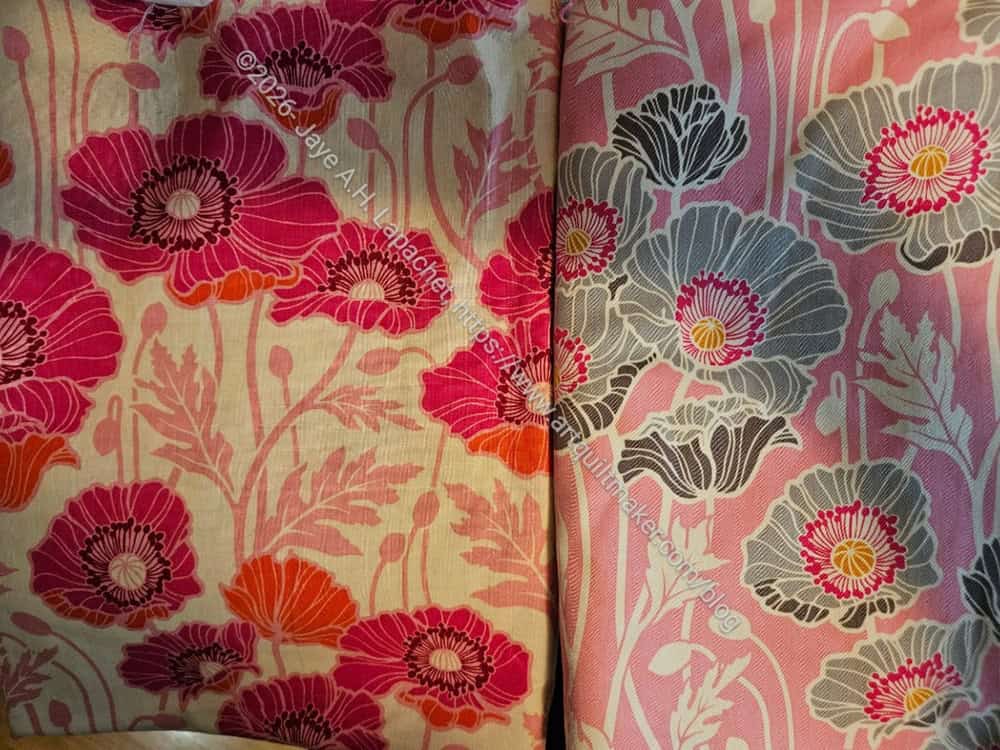
I think I could have put the poppy fabric on the frame casing. I think it would have added a finish or border to the top of the bag.

Cutting for the frame pocket was confusing. I have to look at the directions again to see where the cutting went wrong. I wanted to have the exterior match the exterior and same for the interior. I ended up with extra lining pieces. 

For now I am just excited about the bag. I don’t know for sure how I iwll use it. I am thinking about putting all of my metal tools in in: KAMsnaps, Snap Setter, awl, hammer, etc. If there is space, I could add in webbing as well.

Working on the Sheffield

The Sheffield is a joy to work on! I can’t tell you how much easier it is to work on a bag when I don’t have to fight with my machine. I didn’t even realize, really, that I was fighting with my machine.

To make this bag, I changed  feet and needle plates pretty frequently, but it really helps use different feet. 

Top stitching thick layers

I used the Bi-level foot to stitch the top stitching on the frame case and that was a breeze. I never used the Bi-level foot before, but now it is one that seems to be coming out of the box often. I am not sure why I didn’t use one before. Maybe I didn’t have one?

Anyway, I was amazed and pleased with how straight the stitching was using this foot.  There are a lot of layers the machine is punching through in the photo above and I got good stitch quality, no broken needles or stuttering. Of course, I wasn’t being the demon speed sewist either. I sewed pretty slowly on this section. 

Sheffield internal zipper pocket

I decided to add an internal zipper pocket, which is not part of the pattern.I didn’t have any trouble making it. I learned a bit from the second interior zipper pocket on the Pandora Charisma and that experience helped. 

I also wanted to turn the bag through that zipper pocket, which is a technique that Tim taught me. I had to think about it for awhile, because I wasn’t sure if any bag could be turned that way. I didn’t come to any conclusion, so I just went for it. It worked out fine. I like this method, because it means that nobody can see where the bag was turned unless someone digs into the pocket.

I am not sure why I wanted a zipper pocket, but I did. I also added a leash, which I do for all of my bags.

Anchoring the lining

Finally, my next step is anchoring the lining to the exterior. I have started but need to finish.

Almost there!

Mini One Handle Tote #3

Mini One Handle Tote #3 lining

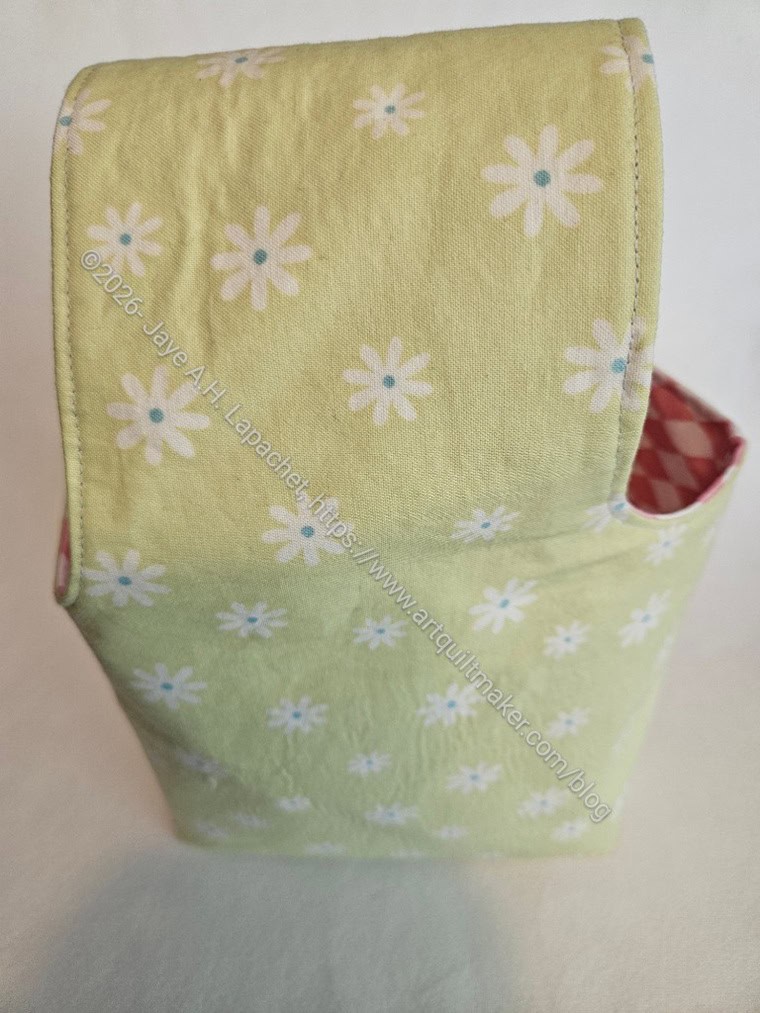
I promise not to show every single one of these that I make. I am just so tickled that the directions from an IG video actually work!

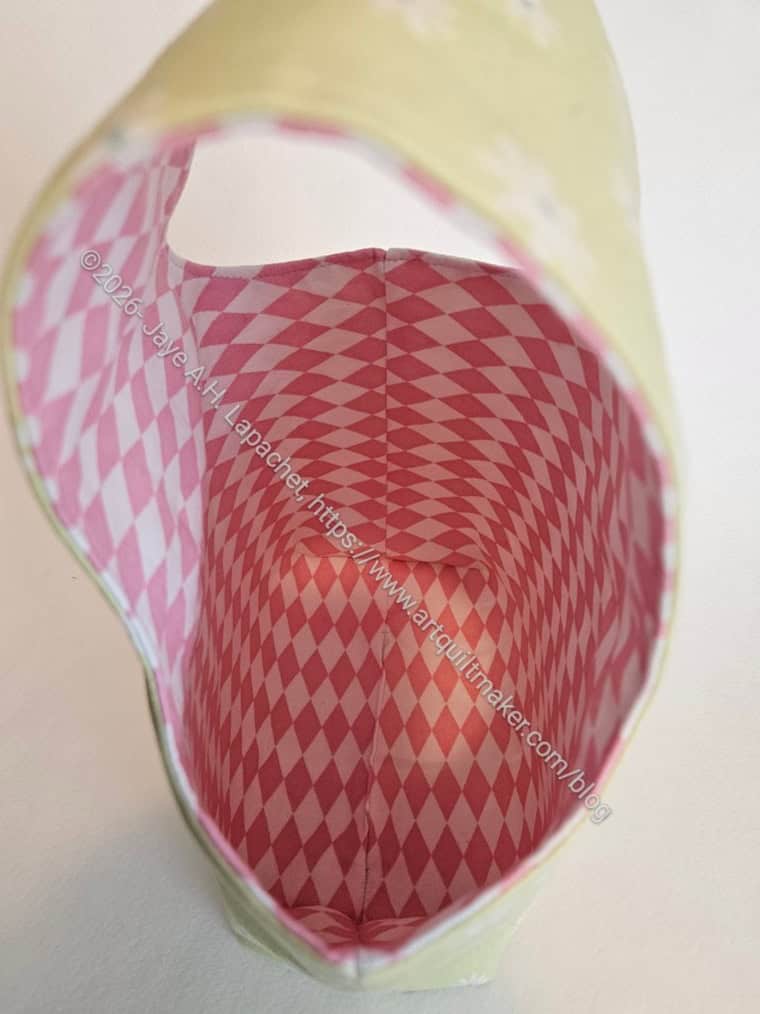
The aspect I worked on in this version was making sure the lining wasn’t saggy baggy.

Bag sewn
Bag sewn

I am pretty pleased with the way it came out. I veered to a 3/8 inch seam allowance when I sewed the lining part of the bag together and used a 1/4 inch seam allowance for the exterior. This all happens before the bag is turned right side out. The picture of the inside of the bag shows the different seam allowances! (enlarge the photo). The trick is to veer smoothly. Don’t abruptly change the seam allowance, though it might not matter if one stopped, then restarted. I think veering is better, though. I may have to try the stopping and starting.

I am thinking about adding a pocket. I’ll have to think about how that would work.

Starting Another Sheffield

Sheffield Tool Tote - front
Sheffield Tool Tote – front

Making a Sheffield bag for me has been on my list for a long time. Since it is #6 for the BAM UFO challenge, it is time to work on it. In case you are confused #6 was selected for this month’s project on which to work. I needed to get busy.

The Sheffield is another Sew Sweetness bag. It has an open wide zippered top and is NOT part of the Minikins series. It is a stand-alone pattern. I made one for Gerre (the purple one above) a few years ago.

I put it on my UFO list, because I knew I could finish it within the 30 day window. I was surprised to find I had started to cut pieces for it. They were in my bag fabric bin with the metal frame. That means it truly was a UFO!

After setup at Mary’s house and making a couple of small projects, I got to work on the Sheffield. I was sad not to be using my new machine, but was happy that Mary had a second machine I could use. Not having to haul a machine in our stuffed car was great. She has a Babylock Crescendo, which I have used before. It is a high end machine, which was fine to work on. 

Before I could sew the Sheffield, I had to cut the rest of the pieces. As with most bags, there were a lot of pieces, thus a lot of cutting. The handles and the slip pockets were already cut. Apparently, I had already made the choice to make the handles slightly longer than the pattern suggests. Once I finished cutting, I was able to get started with the preparation of the various elements. 

One new thing I did was add purse feet. This was my first time. They are listed as optional in the pattern. Since I had some, I decided it was time to use them. The ones I had were Clover Nancy Zieman Bag Feet in Satin Bronze**

BTW, isn’t ‘purse feet’ a funny phrase? All sorts of hilarious images appear in my brain when I say ‘purse feet’!

Installing purse feet

I brought my ProMaster leather punch** (hole maker) along for the trip. I like this tool. It made punching through two layers of canvas and a layer of foam pretty easy. Since I forgot to bring mine, I borrowed some pliers from Mary’s DH, who is a master wood craftsman. The purse feet are installed by shoving two metal flanges through the hole, putting a metal washer over the two and bending the flanges down as flat as possible. 

Safety first! SF101 covers purse feet flanges

After I installed them I put a couple of layers of SF101 over the  folded flanges to keep them from catching on the lining fabric.

Sheffield bottom with purse feet

There were only four, which surprised me. I always thought purse feet came in sets of five so you could put one in the middle of the bottom to keep the center off of dirty surfaces, but no, the pack I had came with four. I may add some Odicoat** to the bottom. We’ll see.

I had sort of decided not to add the gathered pockets on the outside, then changed my mind and added them at the last minute. I tried out different looks to see how I wanted them to feature.

I finally decided to alternate the fabrics. I didn’t like the look of the all blue gathered pockets. I really wanted to see the Poppy fabric. I had cut the slip pockets out of the Poppy fabric when I thought I wouldn’t use gathered pockets, because I wanted be able to admire that fabric. Using only the blue would cover up too much of it. Using only the Poppy fabric was too jarring and confusing so I eliminated that option right away.

Sheffield - finished exterior mains
Sheffield – finished exterior mains

The main exterior panels came out well with my choices. 

This isn’t a particularly difficult bag, but I felt like I needed to sew slowly and make sure I was doing everything correctly.

After finishing the main exteriors, I was able to put the exterior together. 

Poppy Sheffield for me- exterior

I decided after I had made good progress that I wanted to put some pockets on the inside as well as a leash, so I stopped work on it. I didn’t have the hardware with me and we had already been to Green’s, the place to buy hardware near Mary’s house. Since I had hardware at home, I decided to finish it at home.

This is farther along than I have gotten in the 6 years (SIX YEARS – WHAT?!?!?) since I made Gerre’s. I am pleased with how it looks and pleased with my progress.

I am getting quite the collection of tools and might need to make another one of these to store those. Or maybe I will use this one to store tools such as my my ProMaster leather punch**, KAMsnaps, awl, Snap Setter, etc.


**Obviously, you should shop at local quilt shops and small businesses. However, if you are too busy or can’t find what you need there, I use Amazon affiliate links and may be paid for your purchase of an item when you click on an item’s link in my post. There is no additional cost to you for clicking or purchasing items I recommend. I appreciate your clicks and purchases as it helps support this website.

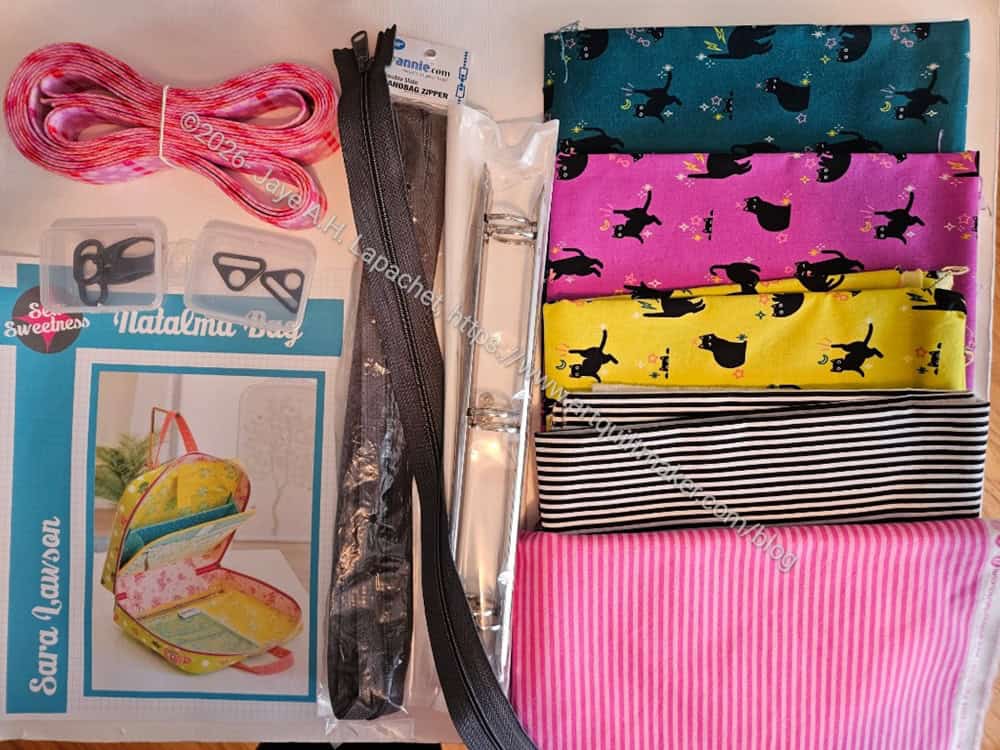
Making the Zip It Up

As mentioned, I decided to make this bag instead of the Aneela Hooey bag when visiting Mary.

Zip It Up #1
Zip It Up #1

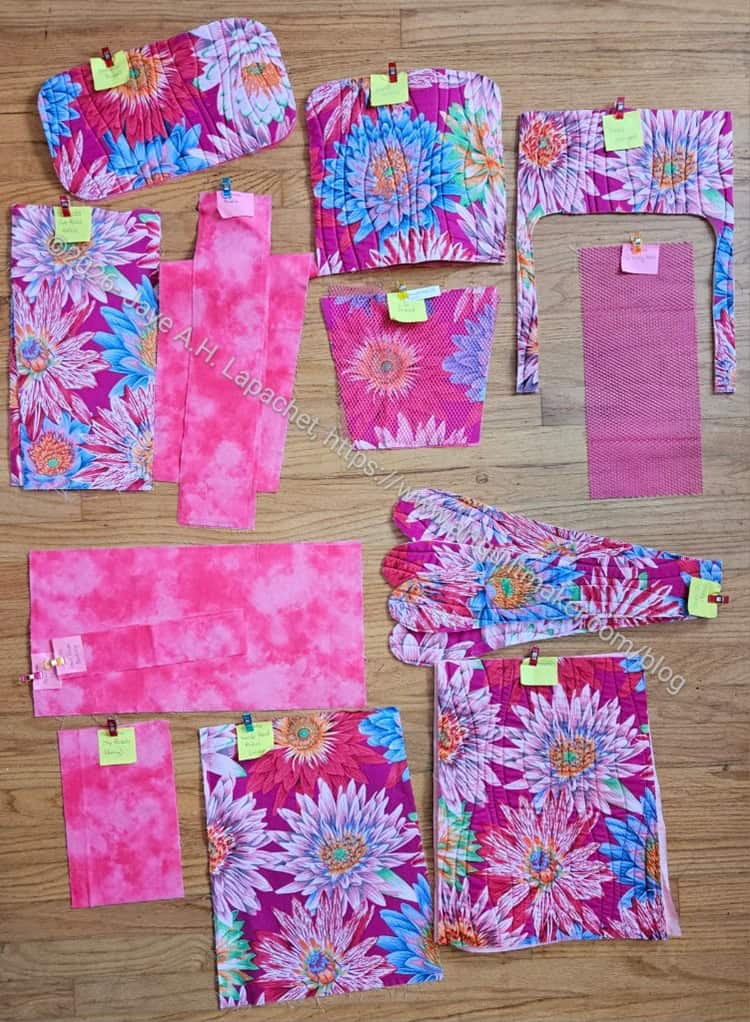
I got quite a lot done, but I had enough fabric to sew this one and one other. I had gathered enough of the selected fabrics to make three Book and Tool Folios. I had enough of some, but not all to make the second Zip It Up. I want the recipients to enjoy the fabrics. I found that I needed two full half yards to make the case body. Though I had enough fabric to start the third one, I decided I would make one and, assuming all went well, make the second two in assembly line fashion. 

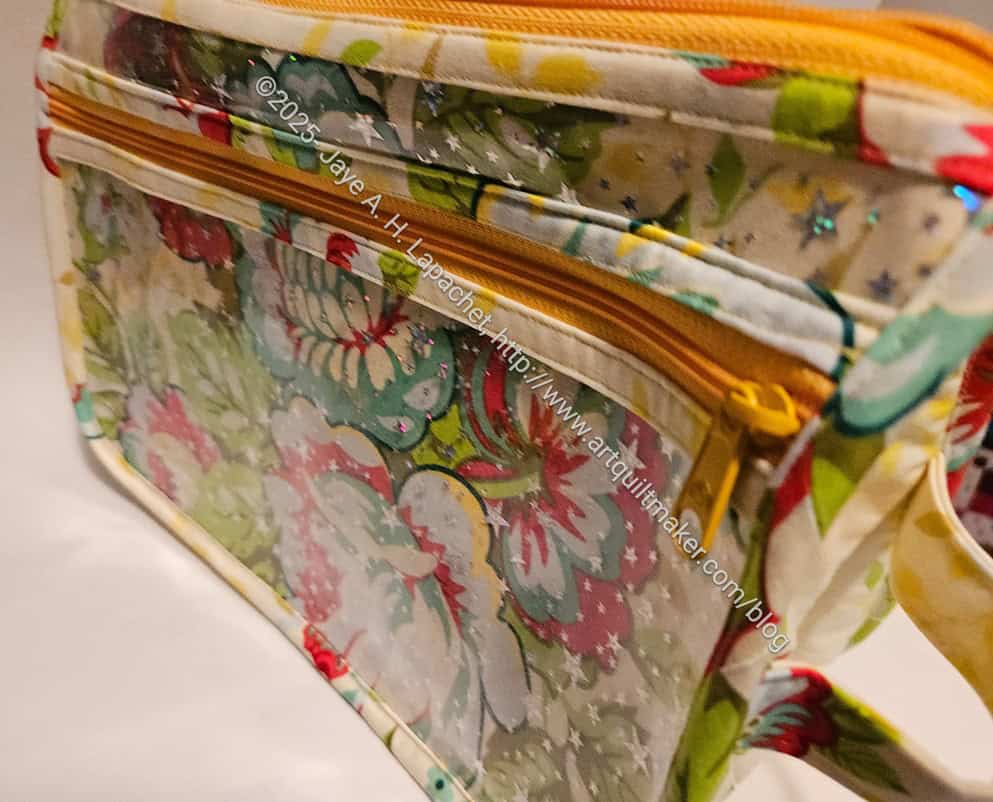
I looked at Mary’s version and chose to make this bag with two vinyl pockets instead of a mesh pocket and a vinyl pocket. I thought they were more useful for non-sewing activities than one mesh pocket and one vinyl pocket.

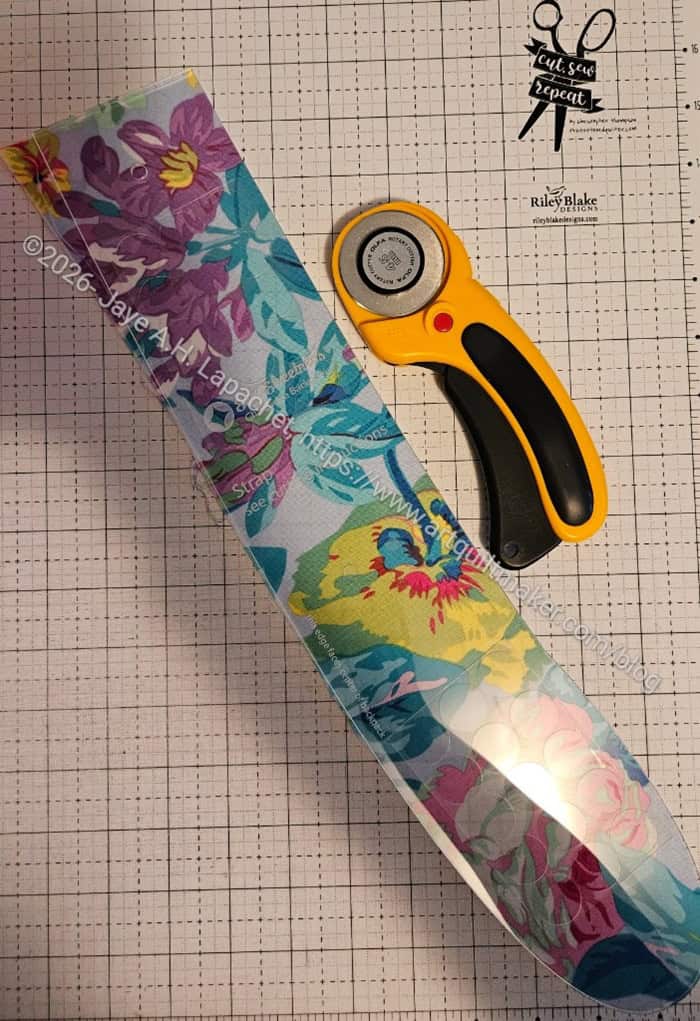
I cut the first vinyl pieces out wrong, so those will become the new windows for future I Spy pouches. I am glad I brought a brand new roll of glitter vinyl. Mary has a lifetime supply of clear vinyl, which was a good backup in case I ran out.

I made good progress despite the need to quilt the fabric. 🙁 As I progressed on the project, I decided I wanted to cover the top of the vinyl pockets below the zipper with ribbon, so I brought the pieces home. Since I was ready to assemble the bag, I needed to stop, add the ribbon and then proceed. Another project to finish at home. Sigh.

Mini One Handle Tote #2

Mini One Handle Tote #2 - finished
Mini One Handle Tote #2 – finished

Don’t worry. I am not going to tell you about every single one of these I make. I am still in the experimental phase so you get to hear about some of my musings. 

Like the Snap Trays, I am experimenting a bit with various parts of how to make this. In this version, I used batting as the interfacing instead of SF101. It works well, but the bag feels a bit floopier, which I think is interesting, though maybe not preferable. It works, but SF101 or, maybe, DecorBond might be better. I haven’t tried DecorBond yet.

I am using fabrics similar to those I used for the Snap Trays. I have a bin of Sorbet fabrics I was using for the Block-a-Long a million years ago. There is a lot of fabric in that bin, so even using some for these bags will leave plenty for me to pick up the Block-a-Long project again. They have a Mary Engelbreit-ish look to them.


Mini One Handle Tote

Mini One Handle Tote #1

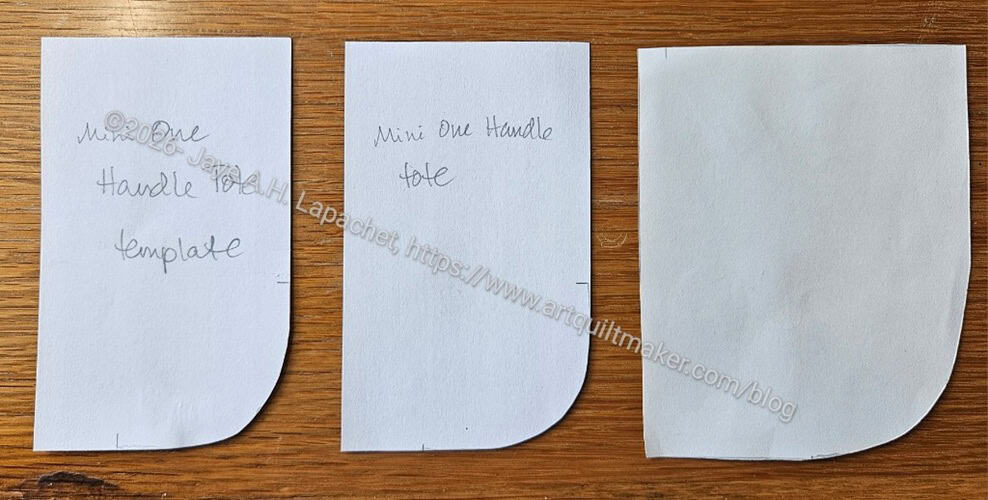
I spent some time on Sunday playing around with making a bag I saw on Instagram. Kotobukisewing showed how to make a Mini One Handle Tote in a  reel <insert eye roll here. and something about it appealed to me.

I succeeded! I had to plow through all the bits that IG glosses over, but despite those things, the bag came out very well. This is a relatively simple bag, but my experience with bag making helped a lot.

I had to watch the video about 355 times, because I don’t know how to stop and start IG videos. I was able to make this bag and it looks similar to the one shown on the video. I had to translate the metric measurements into Imperial/American inches and I am pleased to say the bag still looks balanced. One thing I learned is that there is a metric ruler printed on my new machine’s sewing table. Super helpful!

Yes, I did look at their shop, but didn’t see a pattern. They have a lot of other cute patterns.

Courtside ByAnnie

Courtside pattern and quilted fabric

I am slowly gearing up to make the Courtside Bag, a ByAnnie pattern. I do not play a racquet sport, but really like the look of the bag, especially the vertical zipper.

The first step was to quilt some fabric. I had Colleen quilt fabric on foam for me. That step is ready to go. 

I think the next step is cutting out the pieces. I am not quite there yet. I need to decide if I will add the backpack straps or make this into a crossbody bag only. I don’t have a use for this bag at the moment, but I will think of something.

Finished: Nykky’s Enigma

Nykky's Rose Enigma-front
Nykky’s Rose Enigma-front

I finished and sent off this latest Enigma to friend who helped me with a project. It matches the Multi-Pocket Organizer that I gave to her last year.

Nykky's Rose Enigma-top, open
Nykky’s Rose Enigma-top, open

Like the Green Enigma, I struggled with this Enigma. Many things went wrong and I felt like this project took longer than it should have. Still, I think it turned out well and I am pleased I was able to send it off.

The Tula Pink dots look so great on the inside. This line had some challenging colorways, but the pinky-purple is a favorite of mine.

It also lightens up the inside so it easy to find things.

Nykky's Rose Enigma-back
Nykky’s Rose Enigma-back

I fussy cut various parts a little bit so the roses would be highlighted on the back.

The rose pink of the background looks very cheerful. The shapes and shading of the flowers are nice as well.

Nykky's Enigma-riveted
Nykky’s Enigma-riveted

This is one of the bags that I riveted. Riveting the handles adds to the strength of the bag.

My friend sent me a picture of her closet, which she recently had redone. In  it I can see the bags I have made her on the shelf.

Nykky's closet
Nykky’s closet

The next Enigmas will be finished on the Elna, so hopefully, I won’t have as many problems.

More on the Multi-Pocket Organizer

Multi-Pocket Organizer for me

A few months ago, I was excited to finish my Multi Pocket Organizer. I finally put it in my handbag and organized all the random things into it. 

🙁

My MPO in use
My MPO in use

It didn’t work for me. I have a large handbag and this MPO is too large even for my giant purse. I knew it was big, but I did try it out when it was in progress. I am even more disappointed.

The part of my handbag shown above the red zipper is where I keep my keys and wallet and glasses. I use that area a lot, so when it is squished as shown, it is hard to access. Also, the magnet snap won’t stay closed. 

Never fear! I’ll be able to use this in another bag. I think it will be good for a tote. Stay tuned for that. 

I might also consider carrying fewer random items around with me. I found three different kinds of chocolate in that section of my bag and that is even too much for me!

In the meantime, I need to go back to the 37 handbag organizer patterns I have and see which one will work for this purse. The Mustang is smaller, much smaller, so I may try that one first. There’s always more fabric, right?

Finished: Green Enigma

Tim's Enigma - front, closed
Tim’s Enigma – front, closed

I finally finished the green Enigma. I shouldn’t say ‘finally’, though it did take longer than expected.  I felt like everything that could go wrong did go wrong and I am not sure why. Still, it looks great and I am not embarrassed to give it as a gift.

I still want to rivet the handles, but that requires a little coordination with my “rivet press dealer”. LOL! And I can give it without the rivets if necessary.

Tim's Enigma - open
Tim’s Enigma – open

I am still planning on making a few more of these this year. I want to get over the drama I felt making this one and the pink rose one that I still need to finish.

The lining fabric is one I have kind of been saving. I had it in a pink/orange colorway, but think I used it for something. I really like the blue/green colorway and was looking for a special project on which to use it. I didn’t really try to match up the squares, but they sort of ended up that way, which was nice.

Tim's Enigma - back, closed
Tim’s Enigma – back, closed

Sara of Sew Sweetness’ quarterly challenge has just been announced. The challenge is to use some aspect of quiltmaking in your bag or pouch. This bag requires quilting on the bottom, so it qualifies. I may enter it as my entry. I don’t expect to win, but it is fun to participate.